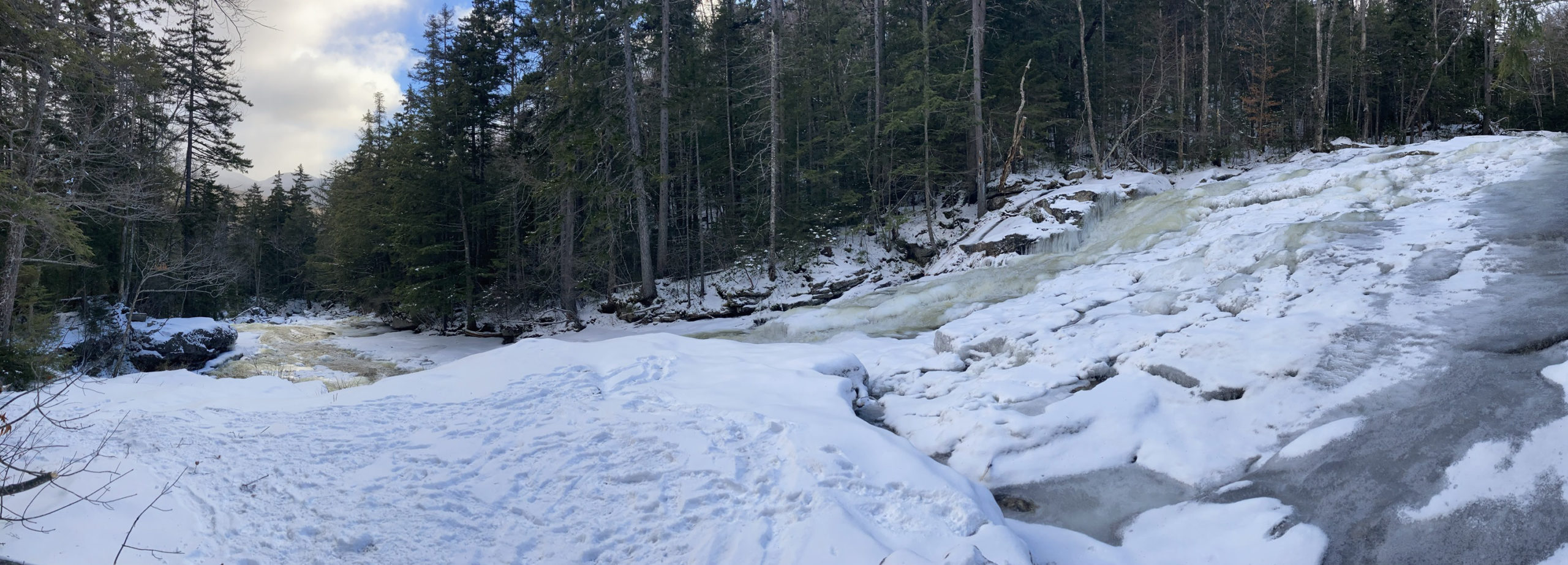
A short poetry podcast by yours truly that I think you’ll really enjoy. I take a nice, easy dive down into one of Robert Frost’s poems to show some of the cool inner workings. This was fun for me to do. I got to write the script, do the recording using my home studio, and even write and perform the incidental music. I used to be a regular on WFPL Louisville with a weekly audio segment, so it was fun for me to brush off those skills. And – there’s a short excerpt from the Rocky and Bullwinkle Show!! If that doesn’t entice you, I don’t know what will. I look forward to doing more of these.
Tag: teaching poetry
-
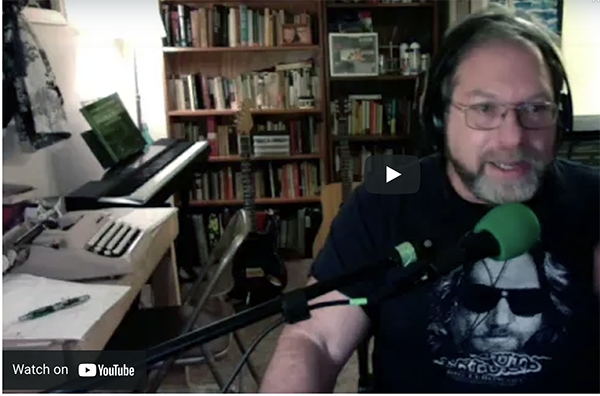
here’s a teaching playlist on Youtube for you
I just put up a new Youtube playlist: “Teaching Podcasts by Michael Jackman, Poet and Teacher.” There, you can watch videos I’ve made about poetry, teaching poetry, and teaching in general.
If there’s something you’d like me to talk about, contact me.
Related Posts:
-
listen to an amazing poem by Gwendolyn Brooks
Here’s Major Jackson reading an amazing poem by Gwendolyn Brooks, “Negro Hero.” The reading is part of a series celebrating the 110th Anniversary of the Poetry Society of America..
Check out the series here: poetrysociety.org/features/reading-through-the-decades.
Related Posts:
-
A little advice on poem titles
I think poets should avoid certain kinds of titles. Particularly one-word titles such as, for example, “Claustrophobia” or “Illness.” Now, not all one-word titles are a problem. I mean the kind that explain or broadcast the poem’s “theme” to the reader. By “theme” in this case I don’t mean literary theme, a general statement about the human condition that we infer from a creative work, but rather titles that announce, “this is the subject I am writing a poem about.”
You don’t want to have your poem come across as a k-12 school essay, such as when a teacher gives the drudge assignment, “write an essay about “X”, and herds of young writers turn in five-paragraph generic “theme essays” on “Freedom” or “Honesty” or “Love” in a stampede of triteness.
I guess I’m also talking about multi-word titles: phrases that do the same thing. “My Best Friend,” or “A Fall Day.” Whether one word or a phrase, what all these titles have in common is that they are literal. There’s no irony, mystery, or surprise that makes the title work with the poem to create some effect on the reader. They’re just “signals.”
“Claustrophobia”: The poem concerns claustrophobia
“Depression”: The poem depicts depression. If you can’t figure it out, the title will tell you.
“Fall Flames”: The poem depicts someone watching a bonfire in fall. The title states what’s already obvious.
“Memories”: The poem may be a strong, imaged-based experience. But it’s about memories, in case you aren’t sure.
“A Work of Art”: The poem unambiguously describes creating a work of art.
“Susan”: The title signals, “This is a poem about a person named Susan,” and as you then expect, the poem describes Susan.
Sure, in the annals of poetry, we see tons of one word titles and descriptive phrases. But they most often have better effects, which you can understand when they don’t evoke the “theme essay” effect, like:
“Lava” – A little surprising, being an image-based poem depicting a lava lamp, not the first “lava” that comes to mind. OK, not the most interesting title–as soon as the third line we know a lava lamp is the central image, but more interesting than a literal title.
“Riches” – Not literally about wealth, but a personal, imagery-based poem about small things that mean a lot to the poet. Again, maybe not the best title, but it does avoid the literal “theme-essay” signal and work with the poem. At least it’s figurative, if cliché.
“The Expectations of a Toddler” – Depicts a mother’s daily chores until the final turn to the attention a toddler demands that we discover has been operating behind the scenes all along. It’s neat because the toddler actually doesn’t make an appearance until later, so the title creates suspense and tension, working therefore with the poem.
My advice is to consider the title as another “line” of the poem, something outside the poem (usually, but not always), but that does important poetic work with it that adds to the whole.
Look at a title as another opportunity to be creative and make some effect on the reader. If you give away the “subject” of the poem in the title, you take something away from the readers’ pleasure in experiencing and interpreting the poem for themselves.
Another problem: a literal title suggests that the poet believes the most important thing about a poem is its “subject” or “meaning,” instead of understanding that a poem is “a small machine made out of words” (William Carlos Williams) that communicates experiences and emotions to the reader (Stephen Dobyns) through imagery. Meanings, Plural! come along for the ride, but are not The point.
Why do newer poets write titles this way? I believe, anecdotally (I’ve done no research into it), that this approach comes from how writing is still taught. Especially K-12, but I wouldn’t claim college isn’t implicated here too, students get the (false) impression that everything in writing is in service to the “topic.” As a result, poetry seems to be thought of as a little theme essay that makes “points” to be decorated in pretty, “poetic” language, when they should understand that in writing poetry they’re creating a small(ish) word-machine that communicates experiences and emotions. Primarily through sensory imagery.
So that’s a habit of mind about poetry that needs to be untaught, and a good place to start unlearning that habit is by thinking hard about titles.
Related Posts:
-
poems are not school papers
So many of my intro to creative writing students can’t get out of the habit of writing poems like papers, planning a “topic,” and outlining the “points” they want to make. They think of poems as “meanings” decorated with pretty, poetic language.
No! The purpose of a poem is to convey experiences and emotions, which carry possible meanings on their backs.
Related Posts:
-
Teaching Poetry as Music: An Audio Assignment
Note: This assignment is designed to have students engage with poems as sound. By recording poems being read aloud students can be immersed in the auditory nature of poems’ rhythm, word sounds, and other musical qualities, such as rest and acceleration. The relationship between sound and meaning are also explored. Model poems I have used for this assignment are available online, have good musical values and interesting subject matter. Poems I’ve used have included:
“My Papa’s Waltz” – Theodore Roethke
“if there are any heavens” – e.e. cummings
“Poem #340, I Felt a Funeral in my Brain” – Emily Dickinson
“The Journey” – Mary Oliver (From New & Selected Poems)Note to Students
All these poems have beautiful music which reward reading. Poems have to be read aloud to fully appreciate the music poets craft out of the English language. So we want to hear your voices!
Instructions
Choose one of the model poems to work on.
First, read the poem to yourself a couple of times. Then, practice reading it aloud several times, paying attention to words and phrases you want to emphasize in each line – that is, which words and phrases seem to need more weight or emphasis? How fast or slow do the lines feel? Do they seem to speed up or slow down? What will you do at the end of a line if it enjambed – read right across? What if it is end-stopped? Will you pause?
When you have decided how you want to read the poem, make an audio recording of the poem. Add some introductory information, for example, “This is a recording of me reading [poem] [by]”. Post it to the assignment.
Finish your assignment by responding to the following reflective prompts. Please include the prompts above your answers:
- Did the poem seem to be any different when reading to yourself and reading it aloud? In what ways?
- Did reading the poem aloud help with understanding it? If so, why do you think so? If not, why do you think not?
- What did reading the poem aloud cause you to notice about the poem in terms of its use of words, syntax, lines, stanzas, and line endings?
- Are there places the poem seems to want to speed up or slow down? Are there words that should be said more slowly?
- What feelings and thoughts did this poem create in you, as a reader and an audience?
Thanks for your insights! Remember: Apply your new terminology.
We will play your audio files and discuss your answers to the reflective prompts.
For several decades I have conducted writing workshops of all kinds, and for 14 years I have taught writing on the faculty of Indiana University Southeast. Now I have decided to give back for these opportunities by making my lessons available online. I hope you enjoy this lesson, and the other lessons here on my writing Web site, michael-jackman.com. You may download and use any lesson here free of charge, provided you give credit as: © Copyright Michael Jackman. All Rights Reserved.
Although the lessons are free of charge, please help support all my work in writing and maintaining this site through a small contribution using the PayPal link on the top right of this post. Thank you for your support! – Michael
-
Poetry: Six Essential Principles
Here are six essential principles for writing lyric poetry. They are based on my many years of writing and studying “ars poetica,” the art of poetry. Keep these principles in mind when drafting and revising.
1. Poetry is Music
A poem isn’t just words in a certain order. A poem is also made up of sounds the words make, arranged to create effects. Poets train their ears to be aware of sound. Therefore, a poem is a musical performance.
A poem can be enjoyed as much for the sound of it as for the sense. In fact, the experience and meaning of poetry is tied up with the music of the language.
Think how sound in English includes so many things we have musical terms for, because vocal production works like a musical instrument. For example, tone, attack, accent pitch, melodic line, and silence between sounds (in music known as rests). Consciously or unconsciously, poets consider:
- all the different blends of vowel and consonant sounds that have lighter, sweeter/darker, heavier tones because they are produced in different parts of the mouth
- attacks using open or closed lips and the position of tongue that make slurs, legatos, staccatos, glissandi;
- English is an accentual language. It places strong and weak accents in different places, such as Ken-TUCK-y, FAS-cin-A-ting that create rhythms
- Longer and shorter lines and sentences create melodic phrases.
- Pauses due to punctuation and the spaces between words function like musical rests (line breaks, periods, commas, semicolons, colons, dashes, exclamation points, question marks, and the natural boundaries between clauses).
Being sensitive to the melodic and musical nature of language will help your poetry become more interesting.
2. Poetry is based on Image
When writing fiction and other narratives such as creative nonfiction, you learn to “show and not tell” or at least “show as well as tell.” The emphasis is on showing or describing. That is, using vivid language to evoke the senses and create an impression of a real place.
Just as with narratives, description (called “imagery” in poetry) that is vivid and evokes the senses is key.
Images, and not statements, carry the experiences, emotions, and ideas to the reader (poems based on “wit,” meaning wordplay and punning, being perhaps an exception).
Newer, less experienced poets often feel the purpose of poetry is to fill the page with lofty sounding statements. This concept is an error. Time after time, it has been shown that “lofty” or “important” statements often sound trite and make the poet seem pretentious. It robs the reader of discovery, trying to tell the reader what is important.
In contrast, poetry is a vehicle (poet William Carlos Williams called it “a small machine made out of words”) that carries experiences and emotions as well as ideas to readers. While ideas can be mentioned, the need to be “earned” by images. Also, images contain ideas that are open-ended. Statements tend to be closed. Therefore, statements shut down a poem to readers, while imagery opens up a poem to readers
3. Word Choice Matters
In a vocabulary-rich language like English, there are many options. In a flexibly-structured syntactic language like English there are many places within a sentence in which to place words, phrases, and clauses. The words you use and where you put them matter.
I like to think of words like cherries placed for the reader to taste. It gives the idea of an image where a word = a sweet, delicious fruit. Though this is misleading because sometimes you want words to taste “bitter” or “acidic.”
At any rate, experienced poets soon discover that in a short form like poetry, every word counts. And a deletion, addition, or substitution of just one word can have profound effects on a poem.
Make attention to vocabulary and the study of vocabulary part of your life of poetry.
4. Poems “Turn“
The “Turn” (called the “volta” in Italian) is an important part of poetry. Think of it as a change of direction in the poem’s tone, subject, language, or direction. There can be more than one “turn” in a poem, but often a poem “turns” towards the closure. Discovering the “turn” is part of what makes a poem surprising and interesting. Another way to put this concept of the turn is that poems need to “go somewhere” in terms of emotion, experience, and meaning. That is, the mood, meaning, building of tension create some kind of what might be referred to as “arc,” “direction,” or “flow.”
5. Lines Matter!
Poems are made up of lines. Lines do not have to equal one sentence. The idea of line NOT sentence is important. Sentences can stop in the middle of lines, and they can span multiple lines. Putting language into lines, and modifying the lines in revision changes the way we experience something. On the page it is visual, on the page and on the “stage” it is a part of performance.
Line endings are important places of emphasis, and so it’s important what word you place there. Your line endings should do some “poetic work.”
6. Use Modern Language
Writing contemporary poetry, we should not deliberately sound archaic or “poetical.” Strive to make your lines and syntax sound natural, not tortured. And this will be true in formal poetry as well. That is, unless you are deliberately playing past against the present in terms of language effects.
(updated 12 January 2020)
For several decades I have conducted writing workshops of all kinds, and for 14 years I have taught writing on the faculty of Indiana University Southeast. Now I have decided to give back for these opportunities by making my lessons available online. I hope you enjoy this lesson, and the other lessons here on my writing Web site, michael-jackman.com. You may download and use any lesson here free of charge, provided you give credit as: © Copyright Michael Jackman. All Rights Reserved.
Although the lessons are free of charge, please help support all my work in writing and maintaining this site through a small contribution using the PayPal link on the top right of this post. Thank you for your support! – Michael
