A short poetry podcast by yours truly that I think you’ll really enjoy. I take a nice, easy dive down into one of Robert Frost’s poems to show some of the cool inner workings. This was fun for me to do. I got to write the script, do the recording using my home studio, and even write and perform the incidental music. I used to be a regular on WFPL Louisville with a weekly audio segment, so it was fun for me to brush off those skills. And – there’s a short excerpt from the Rocky and Bullwinkle Show!! If that doesn’t entice you, I don’t know what will. I look forward to doing more of these.
Category: writing
…in which some of my published writing is presented
-
why read Jewish poetry?
That’s the title of my “OpEd” piece, which you can read in Louisville’s Community newspaper.
The article grew out of a Zoom talk I gave to Louisville’s Temple Shalom.
I want to thank Lee Chottiner, editor, for publishing the piece. I also want to thank Rabbi Jacowitz Chottiner of Temple Shalom and Lee Chottiner, for inviting me to give that talk.
You can my article online, along with one of my poems.
Related Posts:
-
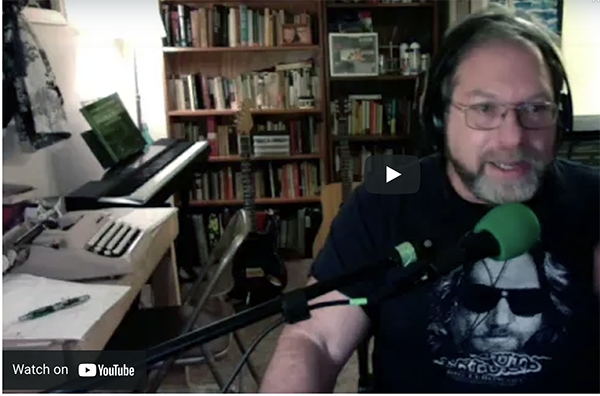
here’s a teaching playlist on Youtube for you
I just put up a new Youtube playlist: “Teaching Podcasts by Michael Jackman, Poet and Teacher.” There, you can watch videos I’ve made about poetry, teaching poetry, and teaching in general.
If there’s something you’d like me to talk about, contact me.
Related Posts:
-
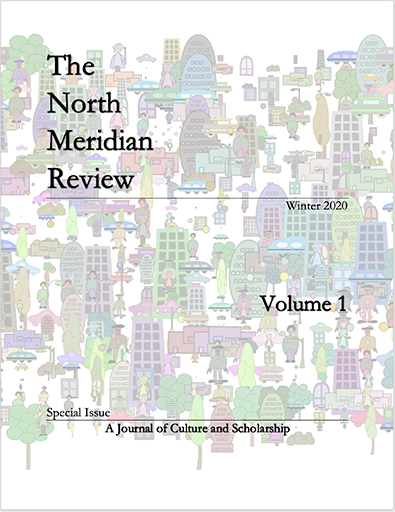
new poems: North Meridian R.
I have three poems featured in The North Meridian Review: A Journal of Culture and Scholarship, Volume 1, Winter 2020 Special Issue. These are three “letter poems” from my chapbook manuscript-in-progress: Letters from Spickert Knob.
You can read the issue here – thenorthmeridianreview.org/past-issues
Related Posts:
-
trying to teach students not to use clichés
With experience as a writer comes certainty about clichés (and their exceptions). Don’t use ’em exclamation point period. These worn-out formulas add nothing to the writing. Setting aside characters like Hamlet’s Polonius who spout clichés as a way of demonstrating that very fact.
Yet I have students in upper level creative writing classes who will debate that there’s nothing wrong with using clichés in poetry, fiction, or nonfiction, that they are there for a reason, that they wouldn’t be there if they weren’t useful. I also have many introduction to creative writing students whose work is as full of clichés as ticks on a dog.
So when students in my “Writing for Teachers” graduate class ask, “How do you teach students not to use clichés?” Well, I don’t have a quick and easy answer I can give in two shakes of a sheep’s tail. But we can break down clichés into groups. There are:
- clichés that are familiar, hackneyed phrases
- clichés of character, dialogue, non-verbal behavior
- clichés of situation, oh, hell, plot, action, scenes that are overused set pieces
I think there’s a difference between the phrases and the latter categories. The phrases are easier to unlearn. The latter categories take more education and experience. They seem to me the kind of mistakes many beginning writers go through that will take some tough, honest critique. “The Sage Old Crone” or “The Wise Old Black Man” who arrives just in time to dispense needed advice in a sort of deus ex machina manner and then disappears into the sunset, leaving the protagonist wiser and changed for the better.
The “lecherous boss” who not only tries constantly to pressure younger, pretty women to have sex, but also must be ugly as well as pure evil.
I’ve even had graduate students who teach creative writing to high schoolers compose blonde, “willowy” waisted girlfriends who just need a strong man, slightly older, but whose dark hair is still full and who dances perfectly, can cook, is loving and wise, and kind, and always patient with their tender but flawed love interest, to convince them that yes, they can chance having that baby and *poof* fast-forward eighteen years to the kid’s high school graduation, and sigh, it was worth it.
I think it’s just part of learning to recognize and discard the weak, the stereotypical, the false, the horribly boring, and the biased clichés. It’s going to take time to see stories with that kind of critical eye. I also recommend the TV Tropes Web site – it’s a gold mine of inventive names and definitions of overused baggage. I’ve started using it to name the problems, such as the “hopeless suitor,” or the “dogged nice guy.” It’s full of intelligent discussion of how they are used, overused, and abused.
Tvtropes.org has inspired me to coin some tropes of my own, such as the “southern fried female,” who is lusty, busty, crude, rude, talks in slang, is lower economic class, white, and can kick yer fanny if it comes to it. But she’s also sad and destined for sufferin’. And there’s the “sage old crone” I mentioned above, who not only can fix the protagonist with her words about the necessity of appreciating what you have, but does it while also fixing the protagonist breakfast at Waffle House.
Because sage advisors, crone or old man, must be of a lower economic class, perhaps a person of color, a sad retiree with nothing else to do, or even better, an (old) street person who has no other needs than to dispense advice to the main character, who then leaves the street person with thanks, but not even a sandwich. End of story.
Using cliché words and phrases certainly can be untaught more easily. Not every character has to giggle, sigh, chuckle, sob, shake their head, nod, groan, frown, or perform another half-dozen or so limited non-verbal gestures. Highlighting a draft using Word’s “advanced find and replace feature” clearly shows the extent of the problem and a conversation can begin about rounding effective characters through individual and non-stereotypical non-verbals.
However, teaching the creative arts does have a vulnerability particular to its discipline. Students can and often do claim the authority to refuse to learn. Because they know better and their more experienced teachers aren’t sagacious, but in reality don’t know shit about shit. Then they are destined to learn “the hard way,” “the long way,” on “the long hard road” right? Haven’t a bunch of us been there and done that? (I’m raising my hand.)
Rarely in any other discipline, such as math, biology, or chemistry, say, does a student claim to know better and want to do it a way that is considered incorrect.
Comes with the territory, I’m afraid. It just takes students longer than one term to learn writing well, creative or otherwise. You don’t get to see the progress as it can’t be measured the same way as in other disciplines.
So you can lead a horse to water, but you can’t make it drink.
But, as you know, when the student is ready, the teacher will appear.
Related Posts:
-
listen to an amazing poem by Gwendolyn Brooks
Here’s Major Jackson reading an amazing poem by Gwendolyn Brooks, “Negro Hero.” The reading is part of a series celebrating the 110th Anniversary of the Poetry Society of America..
Check out the series here: poetrysociety.org/features/reading-through-the-decades.
Related Posts:
-
A little advice on poem titles
I think poets should avoid certain kinds of titles. Particularly one-word titles such as, for example, “Claustrophobia” or “Illness.” Now, not all one-word titles are a problem. I mean the kind that explain or broadcast the poem’s “theme” to the reader. By “theme” in this case I don’t mean literary theme, a general statement about the human condition that we infer from a creative work, but rather titles that announce, “this is the subject I am writing a poem about.”
You don’t want to have your poem come across as a k-12 school essay, such as when a teacher gives the drudge assignment, “write an essay about “X”, and herds of young writers turn in five-paragraph generic “theme essays” on “Freedom” or “Honesty” or “Love” in a stampede of triteness.
I guess I’m also talking about multi-word titles: phrases that do the same thing. “My Best Friend,” or “A Fall Day.” Whether one word or a phrase, what all these titles have in common is that they are literal. There’s no irony, mystery, or surprise that makes the title work with the poem to create some effect on the reader. They’re just “signals.”
“Claustrophobia”: The poem concerns claustrophobia
“Depression”: The poem depicts depression. If you can’t figure it out, the title will tell you.
“Fall Flames”: The poem depicts someone watching a bonfire in fall. The title states what’s already obvious.
“Memories”: The poem may be a strong, imaged-based experience. But it’s about memories, in case you aren’t sure.
“A Work of Art”: The poem unambiguously describes creating a work of art.
“Susan”: The title signals, “This is a poem about a person named Susan,” and as you then expect, the poem describes Susan.
Sure, in the annals of poetry, we see tons of one word titles and descriptive phrases. But they most often have better effects, which you can understand when they don’t evoke the “theme essay” effect, like:
“Lava” – A little surprising, being an image-based poem depicting a lava lamp, not the first “lava” that comes to mind. OK, not the most interesting title–as soon as the third line we know a lava lamp is the central image, but more interesting than a literal title.
“Riches” – Not literally about wealth, but a personal, imagery-based poem about small things that mean a lot to the poet. Again, maybe not the best title, but it does avoid the literal “theme-essay” signal and work with the poem. At least it’s figurative, if cliché.
“The Expectations of a Toddler” – Depicts a mother’s daily chores until the final turn to the attention a toddler demands that we discover has been operating behind the scenes all along. It’s neat because the toddler actually doesn’t make an appearance until later, so the title creates suspense and tension, working therefore with the poem.
My advice is to consider the title as another “line” of the poem, something outside the poem (usually, but not always), but that does important poetic work with it that adds to the whole.
Look at a title as another opportunity to be creative and make some effect on the reader. If you give away the “subject” of the poem in the title, you take something away from the readers’ pleasure in experiencing and interpreting the poem for themselves.
Another problem: a literal title suggests that the poet believes the most important thing about a poem is its “subject” or “meaning,” instead of understanding that a poem is “a small machine made out of words” (William Carlos Williams) that communicates experiences and emotions to the reader (Stephen Dobyns) through imagery. Meanings, Plural! come along for the ride, but are not The point.
Why do newer poets write titles this way? I believe, anecdotally (I’ve done no research into it), that this approach comes from how writing is still taught. Especially K-12, but I wouldn’t claim college isn’t implicated here too, students get the (false) impression that everything in writing is in service to the “topic.” As a result, poetry seems to be thought of as a little theme essay that makes “points” to be decorated in pretty, “poetic” language, when they should understand that in writing poetry they’re creating a small(ish) word-machine that communicates experiences and emotions. Primarily through sensory imagery.
So that’s a habit of mind about poetry that needs to be untaught, and a good place to start unlearning that habit is by thinking hard about titles.
Related Posts:
