A short poetry podcast by yours truly that I think you’ll really enjoy. I take a nice, easy dive down into one of Robert Frost’s poems to show some of the cool inner workings. This was fun for me to do. I got to write the script, do the recording using my home studio, and even write and perform the incidental music. I used to be a regular on WFPL Louisville with a weekly audio segment, so it was fun for me to brush off those skills. And – there’s a short excerpt from the Rocky and Bullwinkle Show!! If that doesn’t entice you, I don’t know what will. I look forward to doing more of these.
Tag: poetry
-
why read Jewish poetry?
That’s the title of my “OpEd” piece, which you can read in Louisville’s Community newspaper.
The article grew out of a Zoom talk I gave to Louisville’s Temple Shalom.
I want to thank Lee Chottiner, editor, for publishing the piece. I also want to thank Rabbi Jacowitz Chottiner of Temple Shalom and Lee Chottiner, for inviting me to give that talk.
You can my article online, along with one of my poems.
Related Posts:
-
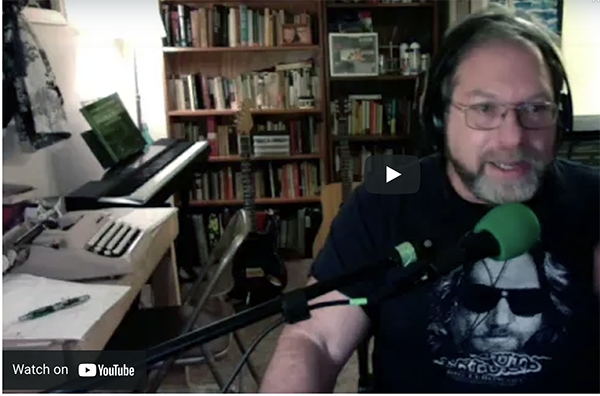
here’s a teaching playlist on Youtube for you
I just put up a new Youtube playlist: “Teaching Podcasts by Michael Jackman, Poet and Teacher.” There, you can watch videos I’ve made about poetry, teaching poetry, and teaching in general.
If there’s something you’d like me to talk about, contact me.
Related Posts:
-
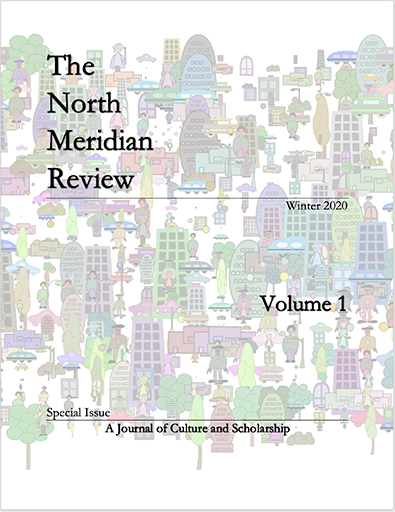
new poems: North Meridian R.
I have three poems featured in The North Meridian Review: A Journal of Culture and Scholarship, Volume 1, Winter 2020 Special Issue. These are three “letter poems” from my chapbook manuscript-in-progress: Letters from Spickert Knob.
You can read the issue here – thenorthmeridianreview.org/past-issues
Related Posts:
-
listen to an amazing poem by Gwendolyn Brooks
Here’s Major Jackson reading an amazing poem by Gwendolyn Brooks, “Negro Hero.” The reading is part of a series celebrating the 110th Anniversary of the Poetry Society of America..
Check out the series here: poetrysociety.org/features/reading-through-the-decades.
Related Posts:
-
A little advice on poem titles
I think poets should avoid certain kinds of titles. Particularly one-word titles such as, for example, “Claustrophobia” or “Illness.” Now, not all one-word titles are a problem. I mean the kind that explain or broadcast the poem’s “theme” to the reader. By “theme” in this case I don’t mean literary theme, a general statement about the human condition that we infer from a creative work, but rather titles that announce, “this is the subject I am writing a poem about.”
You don’t want to have your poem come across as a k-12 school essay, such as when a teacher gives the drudge assignment, “write an essay about “X”, and herds of young writers turn in five-paragraph generic “theme essays” on “Freedom” or “Honesty” or “Love” in a stampede of triteness.
I guess I’m also talking about multi-word titles: phrases that do the same thing. “My Best Friend,” or “A Fall Day.” Whether one word or a phrase, what all these titles have in common is that they are literal. There’s no irony, mystery, or surprise that makes the title work with the poem to create some effect on the reader. They’re just “signals.”
“Claustrophobia”: The poem concerns claustrophobia
“Depression”: The poem depicts depression. If you can’t figure it out, the title will tell you.
“Fall Flames”: The poem depicts someone watching a bonfire in fall. The title states what’s already obvious.
“Memories”: The poem may be a strong, imaged-based experience. But it’s about memories, in case you aren’t sure.
“A Work of Art”: The poem unambiguously describes creating a work of art.
“Susan”: The title signals, “This is a poem about a person named Susan,” and as you then expect, the poem describes Susan.
Sure, in the annals of poetry, we see tons of one word titles and descriptive phrases. But they most often have better effects, which you can understand when they don’t evoke the “theme essay” effect, like:
“Lava” – A little surprising, being an image-based poem depicting a lava lamp, not the first “lava” that comes to mind. OK, not the most interesting title–as soon as the third line we know a lava lamp is the central image, but more interesting than a literal title.
“Riches” – Not literally about wealth, but a personal, imagery-based poem about small things that mean a lot to the poet. Again, maybe not the best title, but it does avoid the literal “theme-essay” signal and work with the poem. At least it’s figurative, if cliché.
“The Expectations of a Toddler” – Depicts a mother’s daily chores until the final turn to the attention a toddler demands that we discover has been operating behind the scenes all along. It’s neat because the toddler actually doesn’t make an appearance until later, so the title creates suspense and tension, working therefore with the poem.
My advice is to consider the title as another “line” of the poem, something outside the poem (usually, but not always), but that does important poetic work with it that adds to the whole.
Look at a title as another opportunity to be creative and make some effect on the reader. If you give away the “subject” of the poem in the title, you take something away from the readers’ pleasure in experiencing and interpreting the poem for themselves.
Another problem: a literal title suggests that the poet believes the most important thing about a poem is its “subject” or “meaning,” instead of understanding that a poem is “a small machine made out of words” (William Carlos Williams) that communicates experiences and emotions to the reader (Stephen Dobyns) through imagery. Meanings, Plural! come along for the ride, but are not The point.
Why do newer poets write titles this way? I believe, anecdotally (I’ve done no research into it), that this approach comes from how writing is still taught. Especially K-12, but I wouldn’t claim college isn’t implicated here too, students get the (false) impression that everything in writing is in service to the “topic.” As a result, poetry seems to be thought of as a little theme essay that makes “points” to be decorated in pretty, “poetic” language, when they should understand that in writing poetry they’re creating a small(ish) word-machine that communicates experiences and emotions. Primarily through sensory imagery.
So that’s a habit of mind about poetry that needs to be untaught, and a good place to start unlearning that habit is by thinking hard about titles.
Related Posts:
-
poems are not school papers
So many of my intro to creative writing students can’t get out of the habit of writing poems like papers, planning a “topic,” and outlining the “points” they want to make. They think of poems as “meanings” decorated with pretty, poetic language.
No! The purpose of a poem is to convey experiences and emotions, which carry possible meanings on their backs.
Related Posts:
