Category: writing

…in which some of my published writing is presented

  • How to Succeed in an Online Course

    How to Succeed in an Online Course

    Dear Students and Teachers:

    With many of us transitioning to teaching and taking courses online, we are learning that we need new ways to approach these courses. This tip sheet is one I present my students at the beginning of the semester, based on issues that come up in my courses. Though some tips specifically refer to Canvas, which is the course management system used currently at IU Southeast, they are easily adaptable to your own online course management system. I hope you find them useful. Please share in the comments section any tips you have for surviving online courses!

    An online course has the culture of a class but experiences it and delivers it through a Web browser. It superficially resembles, but it is not, the culture of social media. 

    Tip 1: Web Browsers and their Pesky Issues

    • If you have an ad blocker installed in your browser or have disabled pop-ups, turn off ad blocker for Canvas Web pages and re-enable pop-up windows to make sure you have all the functions of Canvas working correctly.
    • If you find something you need still doesn’t work, try logging in on another browser. What works in Chrome may not work in Firefox or Safari, etc. etc. etc. 

    Tip 2: Finding Out When Assignments Are Due

    • There are several ways to find out what is due in your Canvas course. You can click on the Calendar, you can view the Course Stream, you can click on the Syllabus and see a list of assignments on the right and by scrolling to the end of the syllabus, and you can click on “Assignments.” I recommend simply looking at our schedule which will be displayed on the home page and which I organized for you. 

    Tip 3: OMG, I lost all my work when the internet went down.

    • Why, oh why, do we never remember this happens? I hate doing work over again. I’m entirely too trusting of the Internet, and then when the internet goes belly up, I’m sunk! So here’s what I’ve learned to do:
      • Choice A: Write your discussion forum reflections and responses and your peer reviews using another program. NOT in your Web browser. Save your work, then copy and paste it into the appropriate box. This way, you’ll never lose your work. NOTE: If your battery runs out or if you lose electric power in a storm – this tip will not help!
      • Choice B: Be foolhardy and trust the Internet will have 100% up time. Type right in your browser. But every minute or so, click “select all” (ctl-A) and copy your work to the computer clipboard. That way it will be saved and when online goes offline you won’t lose everything. 
      • Choice C: Do none of this. We will hear you scream from the adjacent county. 

    Tip 4: If You’re Already Impatient With These Tips, This Tip Is Especially for You

    • During the last couple of years I’ve noticed that many students are too impatient when they are online, and that many students do not read the complete directions. Therefore, they fail assignments due to incompleteness or doing the wrong thing. Partly, this is due to skimming rather than paying attention to the words and to the screen. This is what you need to do:
      • Turn off distractions while doing coursework. A good way to avoid applying social media and Internet habits inappropriately and self-destructively to an online class is to Close all other screens during your class time. Study and write some place where it is quiet and you are not tempted to divide your attention between college-time screens and social-time screens. Research shows that there is no such thing as multitasking. Divided attention, research has discovered, also divides intelligence and accomplishment.
      • Take time to revise and proof-read before you submit. 
      • Read instructions as well as your work aloud to catch errors and other problems (and to simply hear how your English sounds and flows). If you are in a public place you can whisper.
      • Make sure you scroll down to read all the instructions. Sometimes only part of the instructions will be visible on the screen and it may not look like there is more. Always scroll down. Don’t assume you’ve read it all.
      • Do not skim instructions. Force yourself to pay attention to what the assignment is asking you to do. For example, if the assignment states that using new terms correctly is an important part of the assignment, and you skim over this instruction, you will fail the assignment. If the assignment requires that you cite specific examples, then details that give evidence for your points, and not vague, generic references or summaries, are needed in order to pass. 
      • Recognize that you need to read and study course materials more than once. Especially in an online setting, you will not retain what you have only read or skimmed once from a screen.
      • If you have enough screen “real estate,” open study guides and other material in another window to use as a reference while completing assignments. You can print your study materials and keep them in a notebook to refer to. Remember, it’s required that you make connections between the lessons and your other assignments and writing.

    Tip: you can right click your mouse over a link to open that link or menu item or document in another tab or another window of your browser. That way you can open something you need for the course without having to close the page you are on.

    • Don’t confuse online cultures.  An online course has the culture of a class but experiences it and delivers it through a Web browser. It superficially resembles, but it is not, the culture of social media. In that culture, text messages are short, people post short status updates, and usually are satisfied by saying the first thing that comes to their minds, often without revision. Accurate grammar, spelling and punctuation are often unimportant. Our culture is not that culture even though it looks like it on the screen.  Our culture is online academia. Don’t make the mistake of confusing an online class with social media.

    If you have tips about how to survive and succeed in an online course, please share with the class.

    For several decades I have conducted writing workshops of all kinds, and for 14 years I have taught writing on the faculty of Indiana University Southeast. Now I have decided to give back for these opportunities by making my lessons available online. I hope you enjoy this lesson, and the other lessons here on my writing Web site, michael-jackman.com. You may download and use any lesson here free of charge, provided you give credit as: © Copyright Michael Jackman. All Rights Reserved.

    Although the lessons are free of charge, please help support all my work in writing and maintaining this site through a small contribution using the PayPal link on the top right of this post. Thank you for your support! – Michael
  • Resources for Creative Writers

    My list of essential creative writing resources, from my local territory of Indiucky to beyond, periodically updated.

    Regional Opportunities (Indiucky and nearby)

    Our region is fortunate to offer many opportunities for writers. They include open mic readings, readings by guest authors, book signings, writers workshops, and programs of study. Many opportunities are free or low cost. 

    A little further out are these fine opportunities:

    Internet Opportunities

    • Here are sources for publication, conferences, workshops, residencies, jobs, and other opportunities:
      • Creative Writers Opportunities is back! I published a number of pieces thanks to this glorious, comprehensive list of calls for publication, prizes, conferences, and more. But when Yahoo recently got rid of its groups feature, I thought it was gone. Now curator Alison Joseph, poet and faculty at Carbondale’s MFA Program, has brought it back as a blog. Hurrah!
      • Submittable is a portal that many publications use for the submission process. It also contains a list of opportunities through its “Discover” link. Account required, but signing up is free. 
      • Cathy’s Comps and Calls
      • Poets and Writers is a print and digital magazine highly valuable for writers. I recommend subscribing. It also maintains a searchable list of opportunities. 
      • The Association of Writers and Writing Programs (AWP), is probably the most important organization for writers. It features a MASSIVE writing conference every year in a different city, offers services for members, and also publishes as list of opportunities. 
      • Creative Writing Indiucky is a Facebook page I maintain with creative writing news and events of local and regional interest. 
      • Winningwriters.com is a lovely Web site I recently discovered that’s full of advice and opportunities.

    (updated 25 January 2020)

  • the ADD writer: our struggles

    the ADD writer: our struggles

    Recently, writer Nancy McCabe asked me to fill out a questionnaire for her Spalding MFA program faculty blog. Her questions prompted me to put into words, maybe for the first time, how I’ve come to understand the way I write as a person with a pretty strong case of ADD. (Since my girlfriend/partner has it too, and possibly our son, we often refer to our homestead as “Casa ADD”.)

    Here are my answers to the questions, edited and expanded. I hope writers—but not just writers, anyone—pursuing life through the neurological filter of Attention Deficit Disorder will find comfort in them and realize in what ways our own “ADD Normal” (which would be FINE if society would be more tolerant!) differs from expectations foisted upon us that are just not going to conform to our “normal.”

    Q. What struggles do you face in trying to carve out time to write?

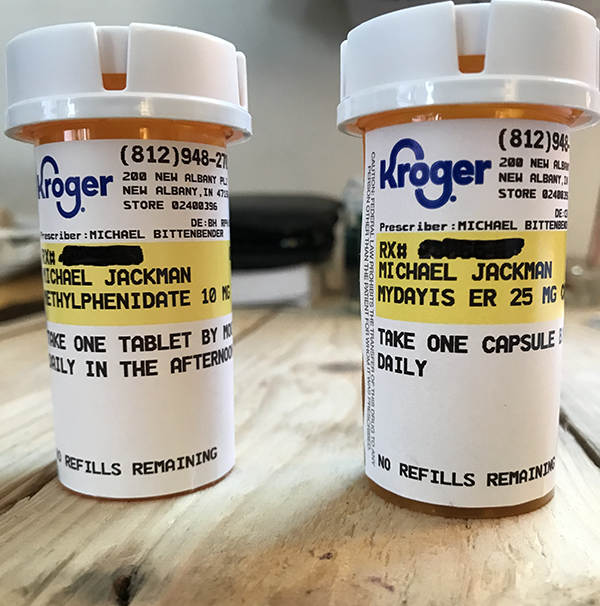
    A. In addition to having no time, I have a brief daily window of serene concentration as I have quite a strong case of Adult Attention Deficit Disorder, and almost all my medicated concentration goes to course preparation and grading as teaching four writing courses per semester is high overhead. When the medication wears off, that’s pretty much it for a useful day. Plus, now that I’ve reached the age of 63, I find I am both unable and unwilling to pull all-nighters like I used to. It’s not sustainable and not healthy.

    Like most people with ADD, I’m not going to be able to hitch myself to a regular writing schedule.

    Q. How do you manage to find time to write/remain productive? Any tips/tricks that you find useful?

    Being content with slower, but nevertheless steady output is important. However, like others with my type of brain, I am not patient, nor am I easily content.

    A. Due to my lifestyle, life circumstances, and neurological challenge, I have to think of writing productivity in different ways than people with more serene concentration.

    Like most people with ADD, I’m not going to be able to hitch myself to a regular writing schedule. The ADD brain just abhors scheduled and repetitive time, and prefers impulsivity (especially during un-medicated time, but even during it). Therefore, I tend to write impulsively, and somewhat erratically, hunkering down to work when the strong mood, inclination, or desire strikes.

    I find I have a cycle where writing will be done regularly, but over a longer arc, looking at what I get done in terms of monthly rather than daily or weekly. Still, due to my many other obligations (teaching career, family, music group, and more), in order to accomplish something creative for myself, I have to deliberately put aside some other thing that will then have to be made up. (People with ADD tend to take on many projects!) There’s no other way during the semester or during heavy family times, as my partner and I both work. Being content with slower, but nevertheless steady output is important. However, like others with my type of brain, I am not patient, nor am I easily content.

    I try to accomplish more during long breaks between semesters, but they also overlap with our son’s school breaks, so there’s less that can be accomplished then. Nevertheless, I love being a parent, and so I judge it worthwhile to have less writing now in order to be a better parent, and defer some of my accomplishments to the future. (But note again: I struggle with contentment and deferment.)

    I look forward to retirement! Whenever I can pull that off.

     Here are my writing Tips and Tricks

    Enthusiasm is fairly well known by researchers to erase the trouble people with ADD have with concentrating on tasks. It’s the routine that most people can make themselves do, that ADD people just can’t push through to!

    • Writing “Small” Helps to Write Frequently: One of my Spalding MFA program poetry mentors, Molly Peacock, taught us the value of writing small poems. No matter how busy, we can often manage to write some little poem – a few lines, even, to keep the fingers moving. I do that at least weekly, often more.
    • Teaching Can Be Motivating: I am one of those creative writing teachers who gets motivated by students. Just the engagement with creative writing courses will often spur writing, even if that particular class is uninspiring, haha. But sometimes I manage to write generative assignments along with the class, and sometimes just answering their questions about creative writing or re-reading what I’m assigning them to read motivates me enough to get some writing done. The same goes for workshops. Running writing workshops prompts me to write.
    • Be Socially & Culturally Involved: Part of living with ADD means my brain tends to trick me into feeling isolated and alienated. Yet, if I go too long without social engagement or being involved in the writing community, I stagnate. The same is true with general cultural engagement. I need it in order to feel a part of things

      When I go to a play, concert, local reading, local band performance, talk to writers, or even read at an open mic; when I give a reading or performance or take part in a workshop or writing group, my desire and enthusiasm increase. When they increase to a certain point, they overcome the difficulties of ADD. Enthusiasm is fairly well known by researchers to erase the trouble people with ADD have concentrating on tasks. It’s the routine that non-ADD people can make themselves do, that ADD people just can’t push through to!

      I never do enough things-that-interest-me. There have been times when I’ve even been on the way to an event and turned back, my ADD brain having talked me out of going. In fact, a phenomenon known as Rejection Sensitive Dysphoria can contribute to this reaction. Other times I recognize the “fictions” my brain tries to tell me, and I force myself to go. I’m always regretful for not participating more often when I realize again how supercharging social and cultural engagement is. Even hearing someone read a poem makes me think of poems I want to write.
    • Take Road Trips! Though they may very well resemble the impulsive aspect of ADD, spontaneous short road trips are worth it. Allow yourself to indulge your ADD brain once in a while. Most aspects of our condition have strengths when used in moderation. Especially for us, we just have to be engaged in life and not descend into too much routine and predictability. However, I’m sure this is just as true for any creative type, not just an ADD person like me.
    • Exercise: I spent a good part of my youth backpacking. My knees are pretty awful as a result, so I do not run or hike intensively or backpack anymore, but I can do light hiking, and I also love freestyle swimming. I also practice Tai Chi. All of these assist my writing and everything else I do. Swimming, however, is repetitive. I have to take my medication before doing laps! Before I was diagnosed, I had noticed how exercise gave me some golden serene time to work. I believe this effect has now been verified scientifically. Meditation is wonderful, too, but it’s nearly impossible for me to sustain sitting still. I have to do it in short bursts. Perhaps because Tai Chi is movement, change, and flow, I find that it is the best of all worlds – exercise, meditation, concentration, flow, that I can do any time, medicated or not.
    • Promise to write something: The pressure of the deadline works for me! It has to be a real deadline, though, not a self-imposed one. And not a catastrophic one! I had enough experience with that kind of stress and failure before my diagnosis. As an example of a useful deadline, recently I was asked to read a poem at a special gathering. I drafted and revised this poem many times, with plenty of time to spare. I was excited, and that motivation allowed me to work consistently and well.
    • Things that don’t work for me: Procrastination avoidance tips like promising myself a reward after a certain amount of work – never has worked. To-Do Lists (forget to read ’em); Schedules (forget to follow ’em).
    • Frequent breaks: Take frequent breaks and write in small, very small, doses until the “groove” or the “flow” occurs. Then, as always, you enter a sort of writing coma where time no longer matters.

    These are my tips/tricks. When I’m “on” I can write anywhere, any time, with any distraction. But I need these tips to get to the “on” stage.

    Q. Is there anything else you want to share about maintaining productivity and balance?

    As I don’t (and can’t) adhere to the common dictum of making writing like a job, with a daily, strictly adhered to schedule, and given all the activity I engage myself in to have what for me counts as a meaningful life, and on top of that adding the vexing problem of coping with an intractable case of Adult Attention Deficit Disorder with its impulsivity and all else it entails, I’m probably a terrible example of how to maintain productivity and balance in creative writing for your readers!

    Note: I have found the online magazine ADDitude to be very useful for understanding our condition.

  • Generative Exercise: “Sasha’s Flight”

    LOL – this is not a poem I’m ever going to send out, I don’t think – so I’m sharing it with you. I promised to do a generative exercise along with my poetry students based on an assignment called “Twenty Little Poetry Projects” by Jim Simmerman in The Practice of Poetry. The exercise has 20 random instructions for constructing a poem, such as “9. Use an example of false cause-effect logic” and “14. Refer to yourself by nickname and in the third person.” You never know how weirdly letting-go the results will be. So…enjoy the strange! – mj

    Sasha’s Flight
    By Michael Jackman

    Our garden is a hamster stuffing
    weeds in his cheeks. The tomatoes
    dare the chickens in the run,
    frightening them by spitting
    seeds and tomato juice. Fat chickens
    shriek and huddle in the coop.
    Sasha, a Barred Rock hen, wishes
    she lived in Jeffersonville, Indiana.

    The tomatoes didn’t dare the hens,
    they were flirting, but dinosaurs
    have never understood this gesture.
    The huddled chickens lick each other’s
    tart feathers.

    When will the highway grow quiet?
    When will the neighbors silence
    their polluting porch lights?
    At night the light coats the collard greens
    like an endotoxin. The highway’s tritones
    curdle the corn and they try to cover their ears.
    The sound bites their sensitive silk and chews
    through a number of kernels.

    Breaking dawn makes politicians chew onions,
    grinding the teary skins all over God’s green acres,
    as onion skins are the diaphanous shawls 
    of rhetoric. Politicians mend fences with wire cutters.

    Sasha, the Barred Rock, discovers
    flight one day and beats her beak against
    the netted ceiling until she breaks free
    to join a flock of wild turkeys running uphill.
    Jackman never sees her again, though he will search
    the knobs of Floyd County, finding only splats
    of her particular green guano, and he will call,
    “Sasha! Sasha!” to the scolding of crows and coos
    of mourning doves. The situation will be derelectly
    novel, as he knows willows are the arbiters of hen
    grievances, and the forests call, “Sasha, cherie,
    fais comme chez toi
    !” On cold winter nights,
    even the chert will light her fires, with one spark.
    The tomatoes spit, corn wails, lights ooze down
    the sides of collards.

  • Muriel Rukeyser on Why People Hate Poetry

    As a teacher of poetry, I often hear dislike of poetry expressed. When I hear it, I’m dismayed, and struggle to understand why. At least until I discovered Muriel Rukeyser’s The Life of Poetry at a conference presentation. Seventy years ago, Muriel Rukeyser wrote these words explaining why people hate poetry that seem to me just as true today.

    Anyone dealing with poetry and the love of poetry must deal, then, with the hatred of poetry, and perhaps even more with the indifference which is driven toward the center. It comes through as boredom, as name-calling, as the traditional attitude of the last hundred years which has chalked in the portrait of the poet as he is known to this society, which as Herbert Read says, “does not challenge poetry in principle–it merely treats it with ignorance, indifference and unconscious cruelty.”

     -Muriel Rukeyser, The Life of Poetry (1949)

    These days, you often hear a truism by poets and poetry faculty that turns Rukeyser slightly askew. It goes something like, “Everybody loves to write poetry, but nobody loves to read it.” Just as dismaying, but I think Rukeyser’s statement explains it just as well.

    Until we teach poetry in a way which raises the bar in understanding, enjoyment, and sophistication; until we properly offer this art in a way that is cross-cultural, multi-faceted, and inclusive, we won’t be able to get poetry the respect it deserves. I believe what poets and poetry teachers would want would be for people to find in poetry a way to explore what it means to be alive, to find comfort in difficult circumstances, to grow as an individual, and even to find a way to give praise for and to existence.

  • Four Points of Good Workshopping

    Over decades of running and participating in writing workshops, I’ve found that the best workshops happen when they include simple but effective guidelines for responding.

    This Four Points of Good Workshopping handout has served me well for creating a community of writers. It helps authors take in critiques and it helps participants guide their responses. It uses well-known interpersonal communication principles in order to achieve these goals.

    (more…)
  • Listen to Some of My Poems on Soundcloud

    Hearing a poem is often stronger and more enjoyable than reading one. I’ve placed audio files of me reading eight of my poems on Soundcloud. Enjoy these.

    Michael reads at Kentucky Homefront live taping, Louisville, KY, April 2017.
    Michael reads an original story at the Kentucky Homefront radio show live taping at Adath Jeshurun in Louisville, April, 2017. The show was a tribute to late singer-songwriter Leonard Cohen.

    Pick an opening line:

    • “When spring began to breed mosquitos…” Listen (“DDT
      (Or, a psalm to dichloro-diphenyl tri-chloroethane)”‘
    • “Jim writes, ‘I feel like the designated scribe of the apocalypse…” Listen (“Bat Houses”)
    • “Mame, du host fayer gemakht…” (“Mama, you made fire…”) Listen (“Mama” By Razjel Zychlinsky, read by Michael Jackman in Yiddish and English)
    • “They kicked them off the field, the Yeshiva boys…” Listen (“Yeshiva Students Kicked off Baseball Field, Forest Park, Queens, Circa 1981”)
    • “I was playing war with little men of plastic…” Listen (“Blackout”)
    • “His Grace, Duke Gonzaga, exempted Salomone Rossi Hebreo…” Listen (“Mantua, 1606”)
    • “There are some rotting joists in the crawlspace…” Listen (“Letter from Spickert Knob;” Runner-up, Raynes Poetry Prize)
    • “How the rain, any rain, and the sun…” Listen (“How the rain”)

    If you enjoyed listening to my poems on Soundcloud, you might like to hear some of my music as well. I suggest my cover of “Colours” by Donovan.

    Michael, playing guitar; his dog Monty looks on
    Michael poses for a music publicity photo; his dog Monty looks on.

Mike Jackman, Words & Music

Mike Jackman, Singer-Songwriter, Multi-instrumentalist, Writer